ENTER
Step into a first-person reconstruction of Fu Hao’s Shang Dynasty tomb.
ARCHAEOLOGICAL PUZZLE GAME · CULTURAL HERITAGE LEARNING
THE EXPERIENCE
A first-person archaeological puzzle game where players enter Fu Hao’s tomb, uncover ritual artifacts, and decode real oracle bone inscriptions through observation, context, and inference.
PLAY THE GAME ↗THE DESIGN QUESTION
Oracle bone script is the oldest known mature writing system in China. Its pictographic forms preserve visual traces of the objects, actions, and ideas they represent, inviting learners to look and infer.
Yet many learning tools isolate characters as symbols to memorize. Oracle Vision instead situates writing inside the material and ritual world in which it was produced, making the learner an active interpreter.
FU HAO · LATE SHANG DYNASTY
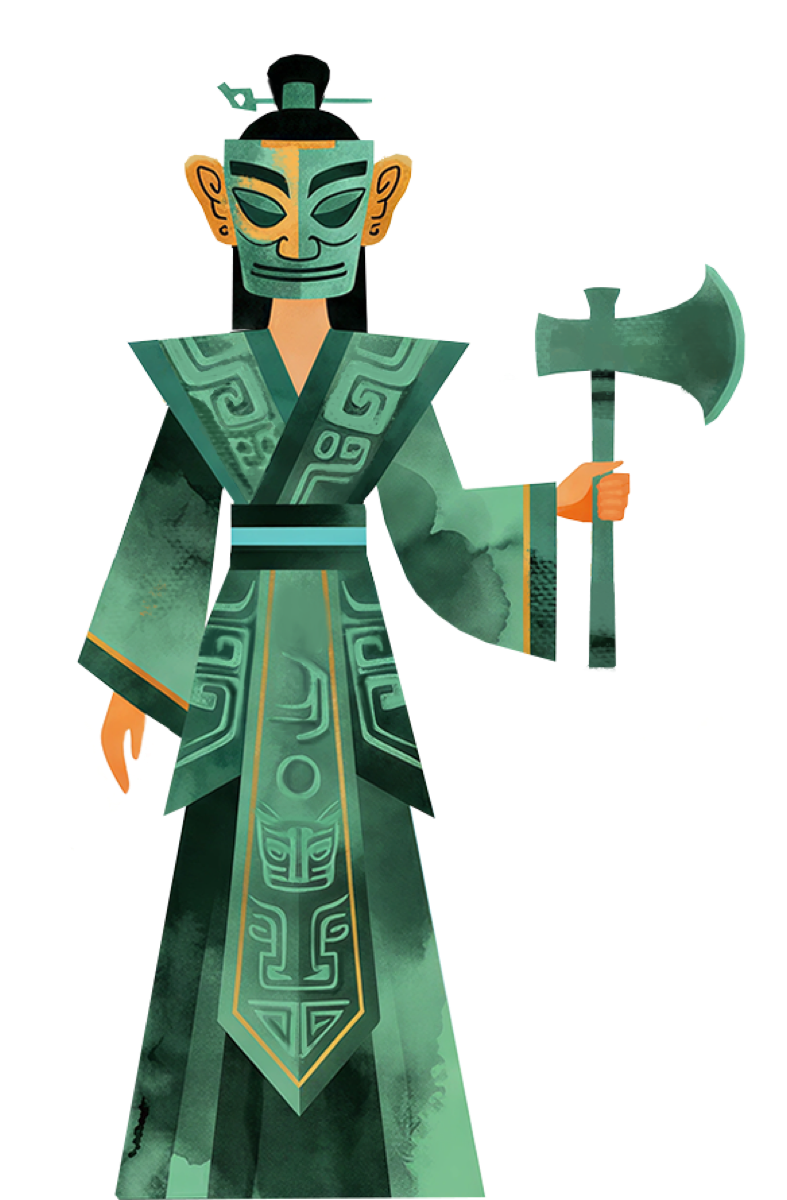
Archaeological discoveries from Fu Hao’s tomb at Yinxu reveal an unusually powerful woman who led military campaigns and participated in divination. Her story gives the game a historically grounded perspective on writing, authority, and ritual life.
THE CORE LOOP
Step into a first-person reconstruction of Fu Hao’s Shang Dynasty tomb.
Read the explorer’s diary and examine ritual artifacts embedded in the chamber.
Activate mural-like memories that connect objects, sound, and historical context.
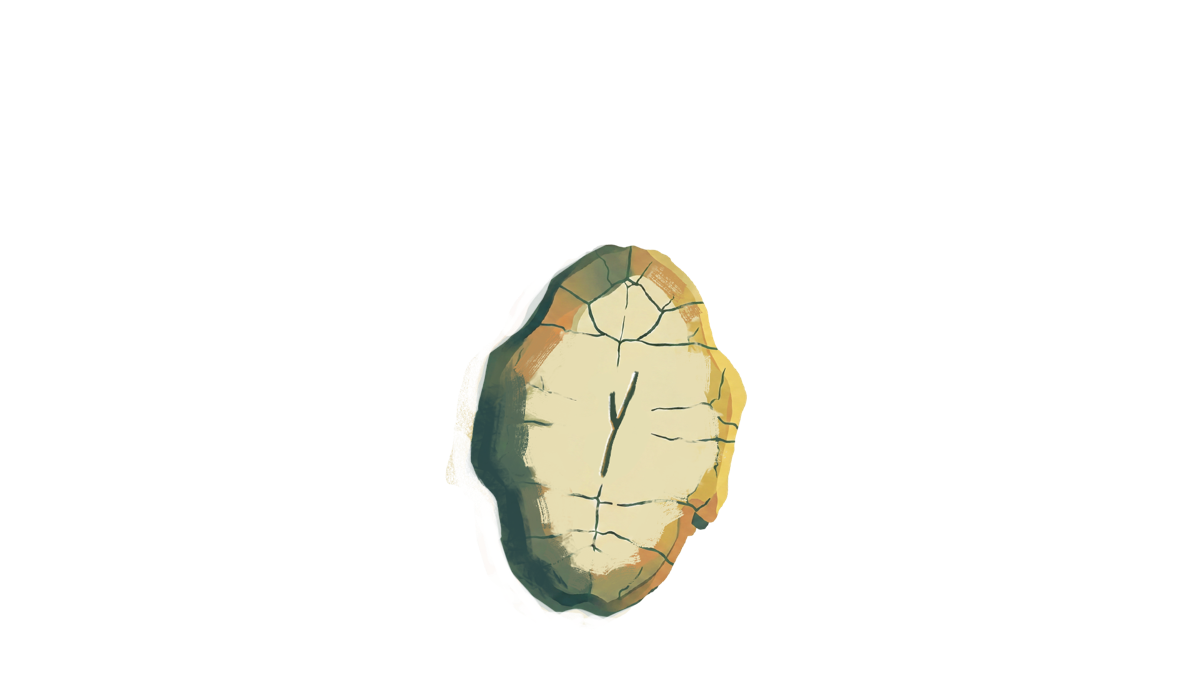
Compare visual clues with authentic oracle bone characters and reason toward meaning.
Reconstruct the inscription to unlock the next chamber and continue the story.
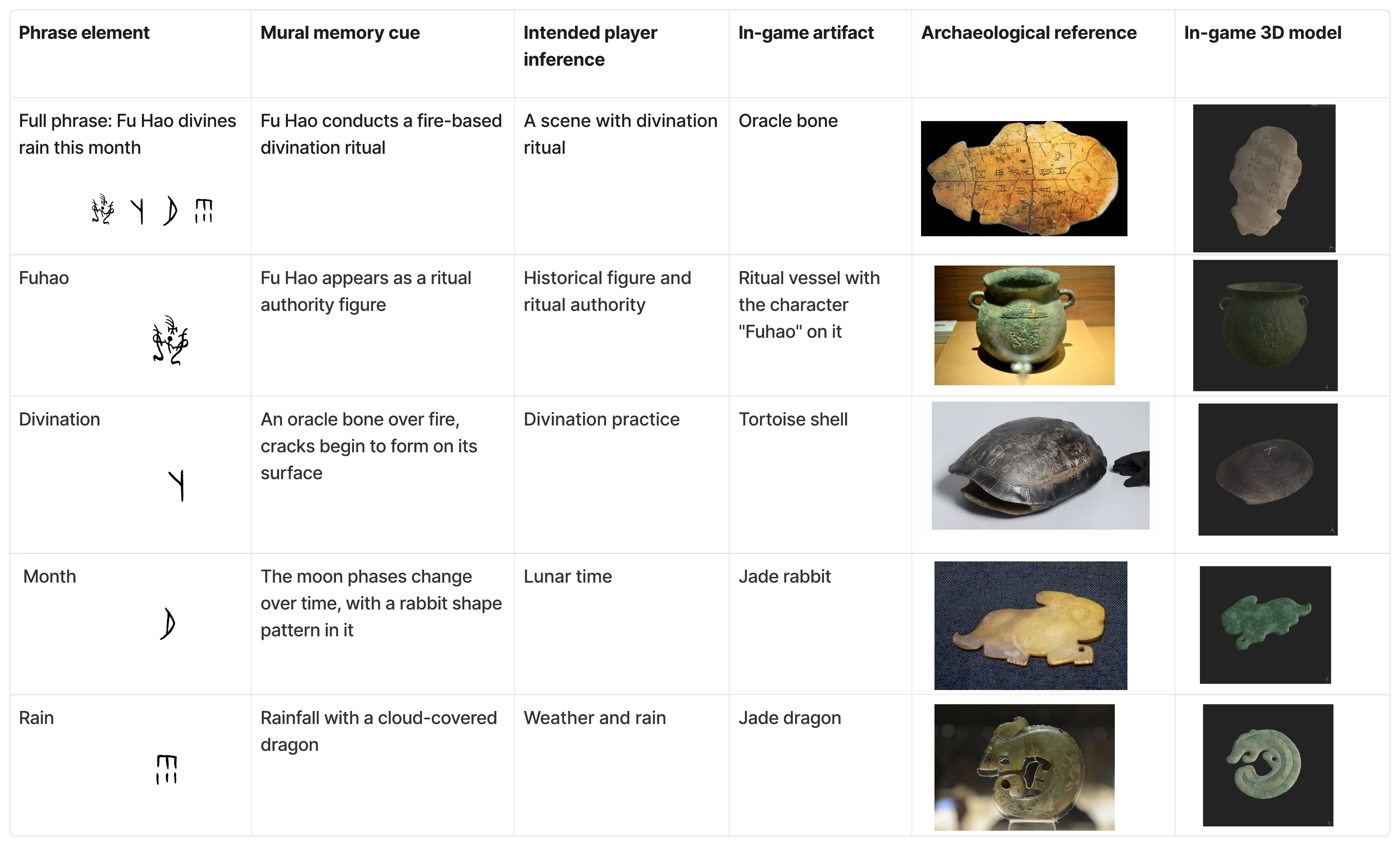
THE INSCRIPTION AT THE CENTER OF THE PROTOTYPE
“Fu Hao divines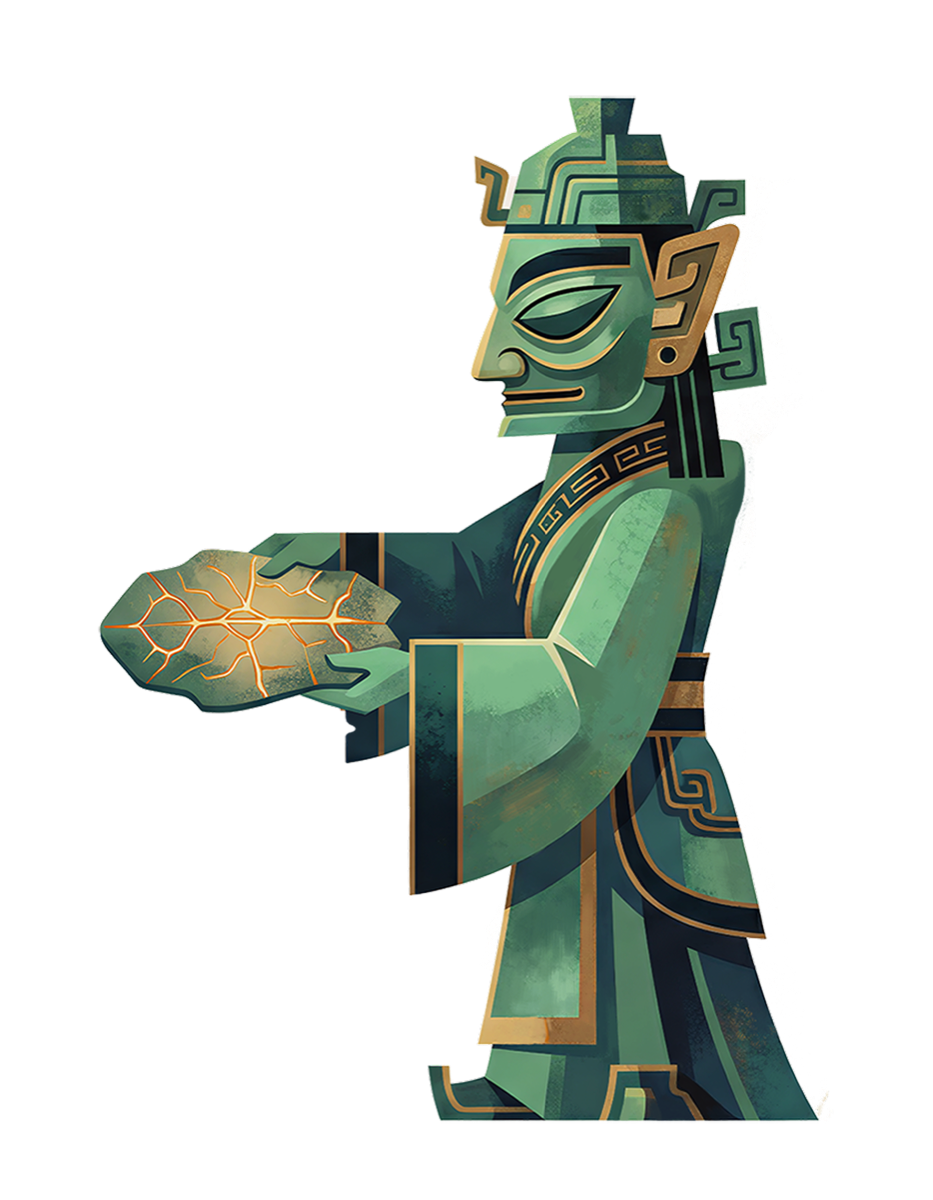
FROM ARCHAEOLOGY TO GAME WORLD
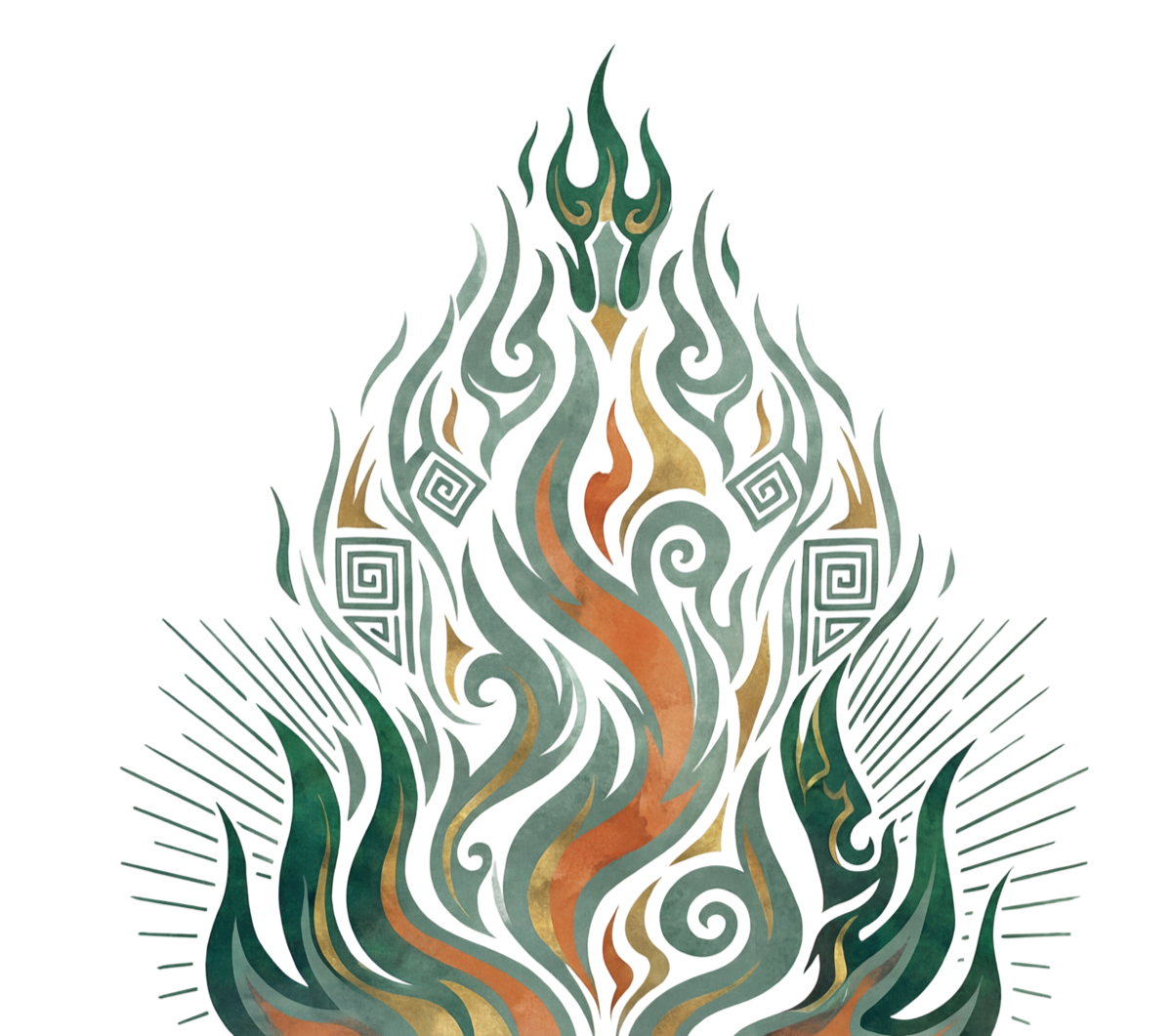
Museum references, bronze-mask silhouettes, Shang and Zhou geometric patterns, and archaeological artifacts shaped the characters, murals, interface, and environmental motifs.
The palette and ornament are not decorative additions: they create a consistent bridge between source material, the game's clue system, and the reconstructed world.
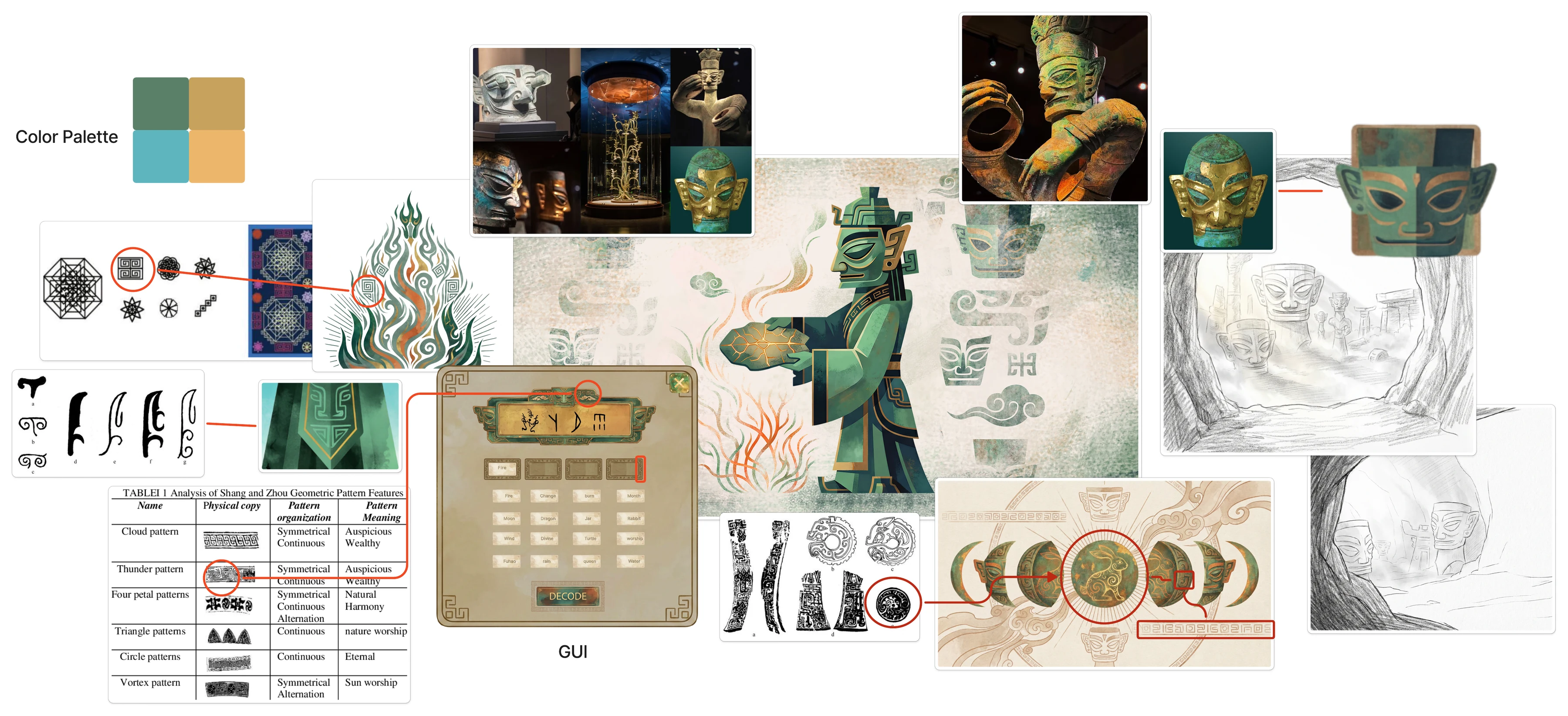 VISUAL RESEARCH BOARDARCHAEOLOGY · CHARACTER · WORLD
FROM SYMBOL TO MEANING
A Unity-built tomb turns historical context into a navigable learning space.
Ritual objects anchor each character in a material and cultural practice.
Murals and spatial audio translate abstract script into visual, situated clues.
A gated decoding interface asks players to interpret rather than simply recognize.
WHAT PLAYTESTING CHANGED
A new Level 0 introduces one artifact and one character before the four-character inscription.
A spotlight and beams of light connect discovered artifacts to their memory murals.
A full-screen mural view lets players compare imagery with oracle bone forms without losing the clue.
An explorer’s diary explains Shang divination, Fu Hao, and culturally specific imagery such as the dragon–rain relationship.
A cooldown after repeated incorrect answers invites players back to the evidence.
DESIGN CONTRIBUTION
Cultural heritage cannot only be read or viewed. It can also be investigated, played, and felt.
Characters become meaningful through artifacts, murals, sound, and ritual context.
The puzzle rewards comparison and inference rather than repetition and recall.
Future chambers will introduce more inscriptions and a fuller, multidimensional account of Fu Hao.