
ENTER THE COMPANY
Players arrive in a strange AI organization and learn its rules through characters, tasks, and environmental clues.
AI LITERACY · GAME-BASED LEARNING · HUMAN–AI INTERACTION
OVERVIEW
A game-based learning experience that turns the hidden mechanics and risks of large language models into a world players can enter, question, and discuss.
PROJECT WEBSITE ↗THE QUESTION
TokenVerse began with a simple frustration: most explanations of large language models are either technically inaccessible or so simplified that the social risks disappear. We wanted learning to feel less like reading a manual and more like discovering the rules of an unfamiliar world.
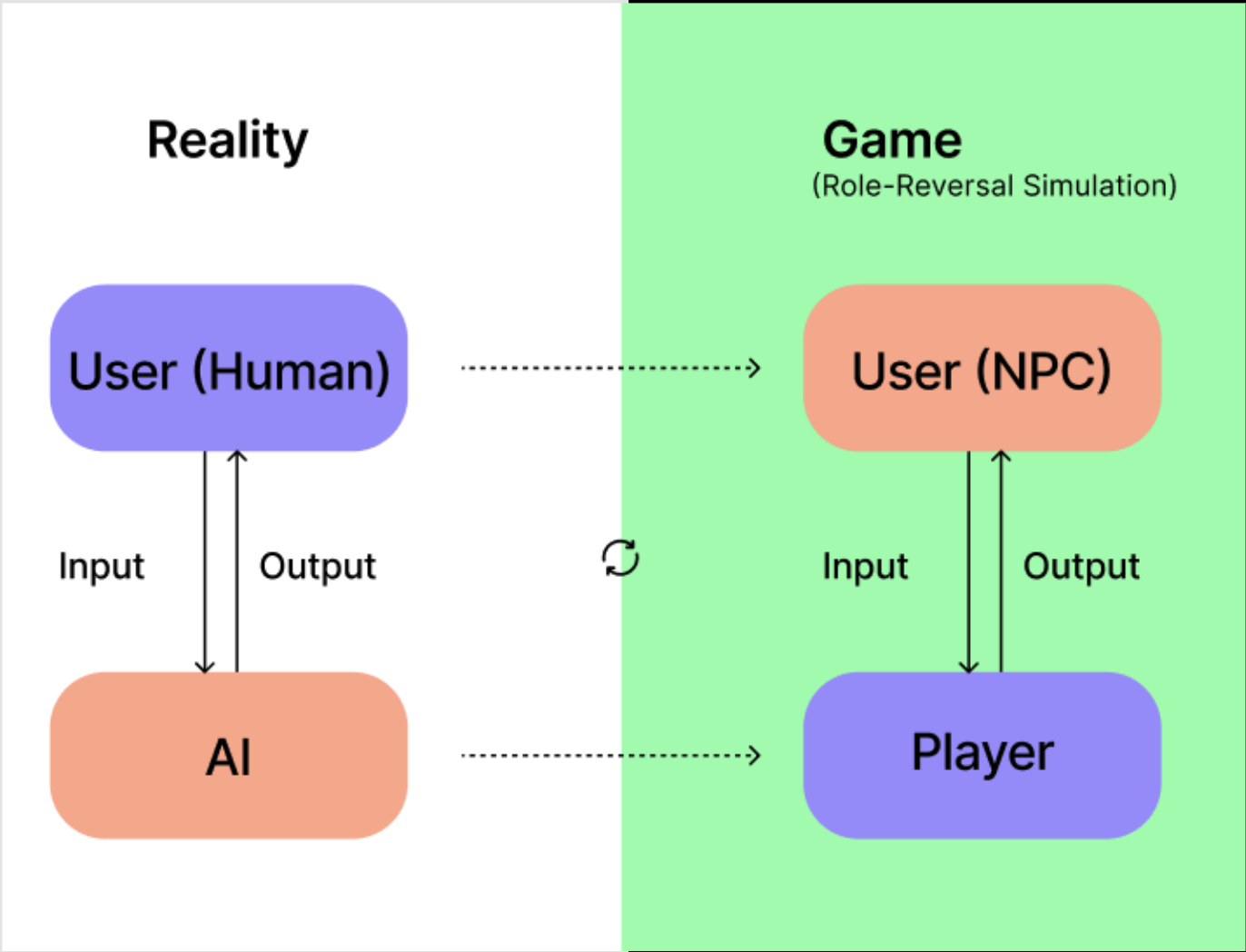
The game uses characters, tokens, workplace metaphors, and moments of uncertainty to make concepts such as prediction, training data, model behavior, and human–AI risk tangible. The goal is not to provide one correct answer, but to give players language for asking better questions.
HOW IT UNFOLDS
Players arrive in a strange AI organization and learn its rules through characters, tasks, and environmental clues.
Everyday interactions become a playful way to encounter how language is broken down, patterned, and predicted.
The system’s apparently helpful behavior begins to reveal ambiguity, unequal consequences, and the limits of automation.
Prompts and discussion moments connect events in the game to players’ own experiences with generative AI.
DESIGN THROUGH ITERATION
Translated AI literacy goals into concepts that could be encountered through action rather than exposition.
Built a rapid web prototype around an AI-company front desk to test the core interaction and narrative metaphor.
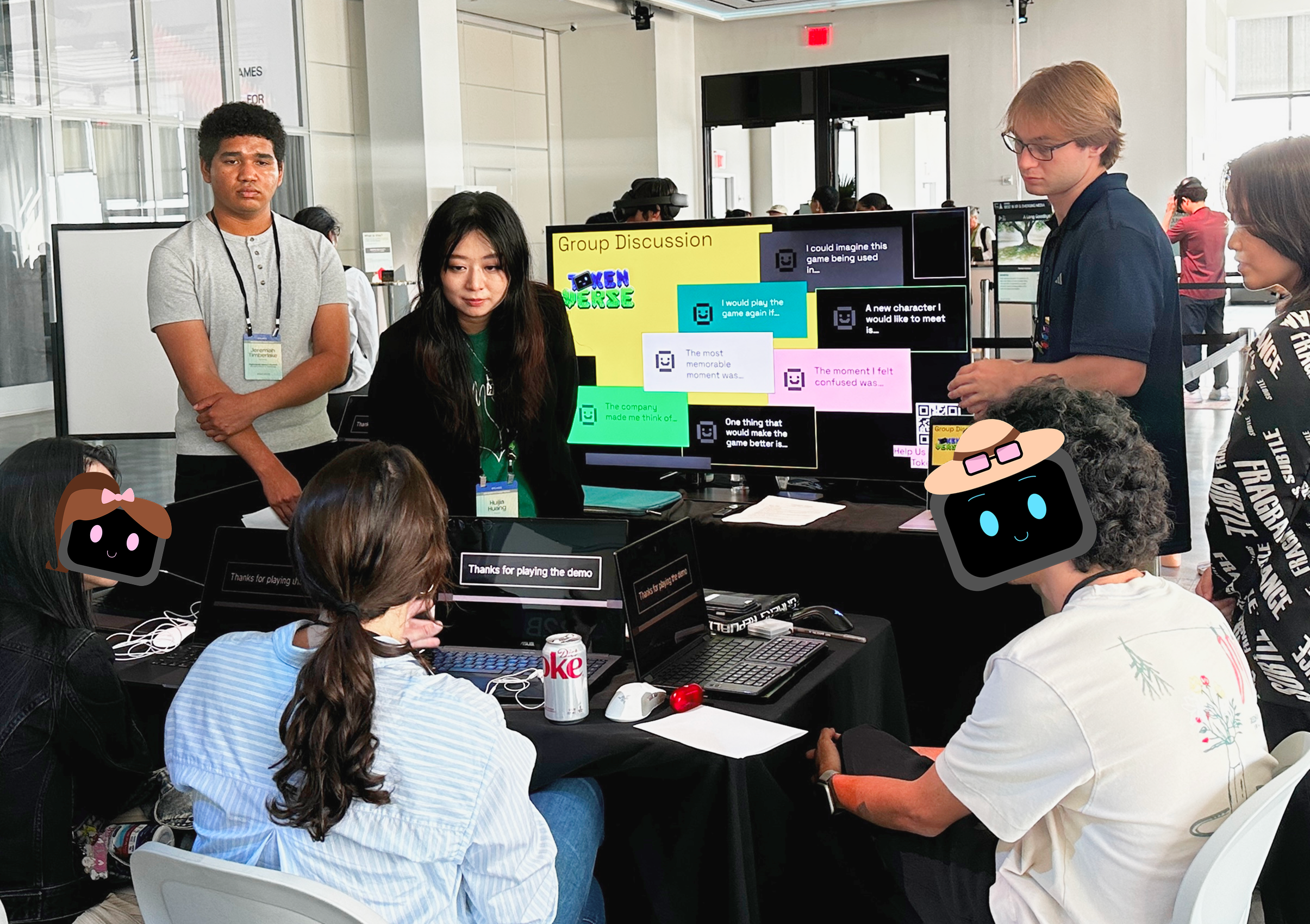
Presented TokenVerse at the Games for Change Festival and collected feedback on comprehension, pacing, curiosity, and reflection.
Completed Chapter One and began planning later chapters that deepen the world, introduce new AI risks, and respond to playtest findings.
WHAT THE PROJECT TAUGHT US
“Play does not make AI risk less serious—it gives people a safer space to notice, question, and talk about it.”
A complete first chapter now establishes the world, learning rhythm, and reflective play model.
Festival feedback is informing clearer onboarding, stronger pacing, and more meaningful reflection.
Future chapters will extend the story across additional LLM concepts and human–AI interaction risks.